
Yulia waits for her glass of pinot gris and senses the eyes of the coupled upon her, judging her, mentally partnering her with the unattached men they know. At home it was not unusual for a woman to sit in a café alone and order a meal, enjoying her own company or a good book. Nobody thought twice.
Odd how she’s been in America for twenty years but still thinks of Ukraine as home.
The wine arrives, and she downs a good third of it in one gulp. When she catches a stare from another lone diner at a nearby table, the words jump from Yulia’s mouth faster than she can stop them, and more sarcastically than she intended. “May I help you?”
“I’m sorry.” He offers a rueful smile. “I thought you were somebody else.”
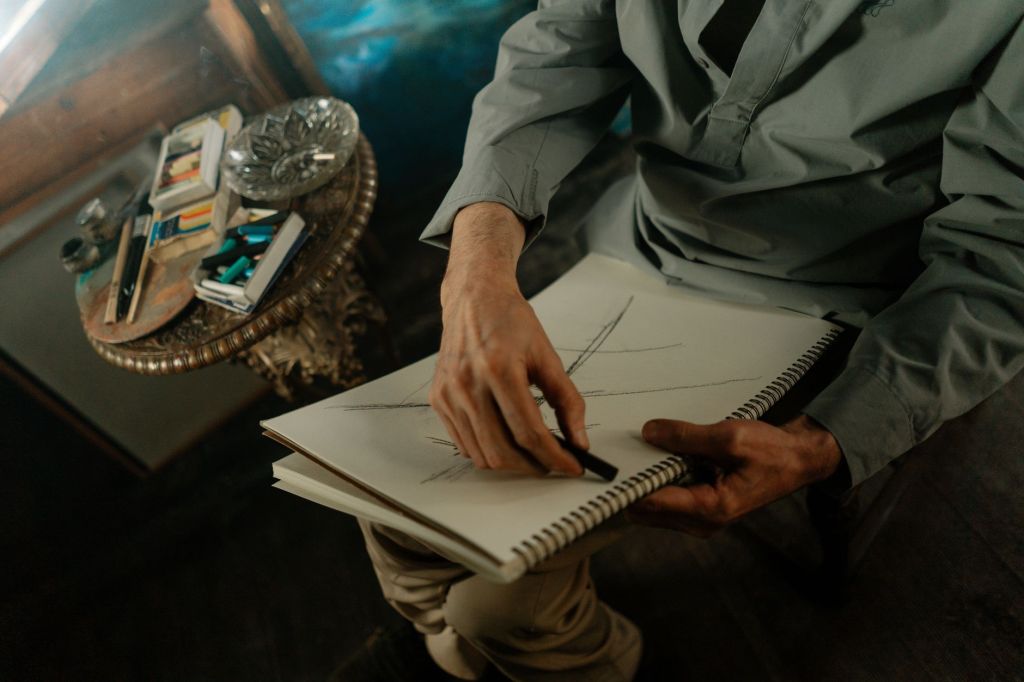
“Somebody who might fall for that line?” He is not unattractive. His face is lined, weathered, in an honest way. There’s a wistful quality in his eyes that might be a pleasant challenge to capture on her sketchpad. But she’s not in the market, for a model or a man.
“Your accent is captivating,” he says. “Russian?”
Now she is off him completely, for either capacity. “Certainly not.”
“Ah.” His voice is softer. “Ukrainian.”
This response is often worse, when people learn where she’s from. The faces change, the voices grow tender. They look upon her as if she is a helpless young girl. Intellectually she knows most are only attempting to be empathetic and kind, and maybe he is doing this as well, but today it comes off as patronizing. Today of all days.
“Would you say that to me if I were a man?”
He nods, chastened. “You have a point. May I buy you dinner as a peace offering? And no, I would not say that to you if you were a man.”
She smiles despite her prickly mood. “I’m afraid I am not good company this evening.”
“Neither am I,” he says. “So we can be bad company together.”
Finally she decides that one meal with a stranger might be an improvement on facing this night alone. This night, different from all other nights. He takes the empty place across from hers and brings his wineglass, half-filled with a robust-looking red. For a moment he sits watching his battered fingers, wrapped around the delicate stem. Then he looks up.
“Tough day?” He tilts his clean-shaven chin toward her glass, now nearly empty.
Her cheeks heat with blood. From the wine, from the day. The worst day. Well, among the worst. The others she doesn’t bother to commemorate. “I’d rather not—” She lets her shoulders fall. “I lost some dear companions.”
“I’m so sorry for your loss.” The lift of his brows saying that he means it.
“It was a long time ago.” Decades. But today it feels as fresh as if it had just happened. They’d been on their way to an improvised seder dinner, Yulia filling them in on the traditions, making up odd ones to tease them. One second Piotr and Celia were laughing beside her. Then they were not.
“A year, a day, an hour,” he says. “Time can be a real jerk about things like that.”
She surprises herself by laughing. Not much, but it feels good, like a weight has been lifted from her heart.
She also surprises herself by taking her phone from her purse, showing him the picture. She hasn’t shown the image in years. Of the three of them, in uniform. Piotr’s face still erupting with acne. A daisy woven into Celia’s braid, a dare in her eyes, a gun in her hand. Yulia with an arm around both, like a lioness with her cubs.
And it isn’t the bright curtain of patronization that comes over her dinner companion’s face. It isn’t pity. She’s not sure what it is, but it’s kind. It’s an invitation.
“Of course,” he says. Moving his gaze from the image to lock with hers. “Of course you were in the military.” From underneath the collar of his shirt, he pulls out his dogtags. “So was I.”




Leave a Reply